
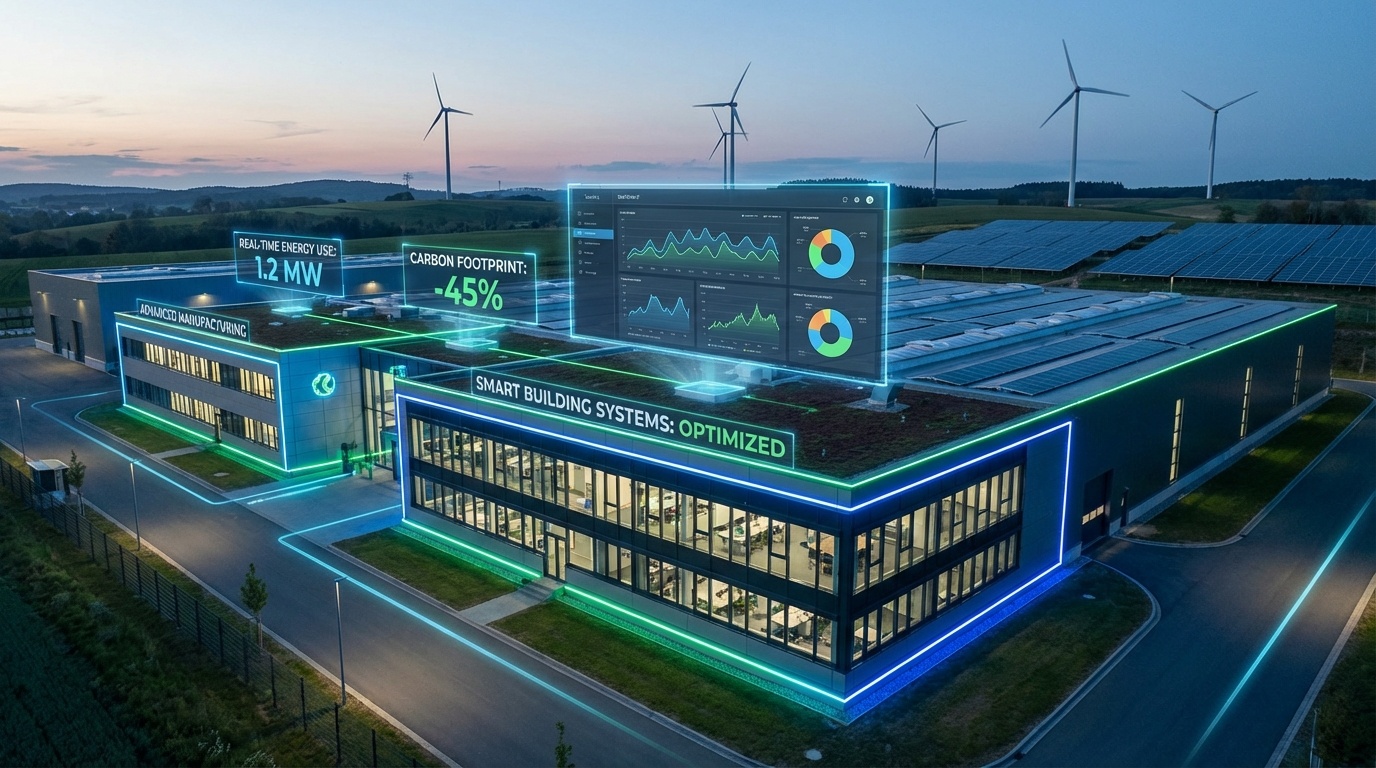

With increasing sustainability regulations being implemented in the various regions, energy efficiency has ceased being a peripheral focus in industries to a fundamental one. Operators of facilities and manufacturers are becoming more and more expected to decrease the amount of energy used, control carbon footprints, and display quantifiable improvements to ESG goals. The energy intelligence driven by artificial intelligence is becoming a viable facilitator of decarbonization of industries in this changing environment.
In the past, energy management in industries was based on the fixed schedules, manual monitoring and periodical audits. Although it provided a simple method of control, it was not that flexible to change. The industrial environment is changing continuously and energy demand varies with the production loads, occupancy levels, weather patterns and energy pricing. Manual systems do not scale and do not react well to this scale and speed.
The energy intelligence that is AI-based brings in a more dynamic strategy. Through meter, sensor, and building management system real-time data evaluation, AI is able to help find inefficiencies as they happen. Intelligent systems assist in adjustments in time, which enhance general energy performance rather than taking action after excess energy has been used up. This transformation of reactive monitoring to continuous optimization is a very crucial element in minimizing wastage of unnecessary energy and its emissions.
Examples of patterns that AI-assisted energy management can point to in industrial facilities include equipment that consumes more power than it should, systems that are running outside of optimal ranges, or systems and systems that are using more energy than the production schedule would indicate. The knowledge will enable the operators to make effective decisions that will enhance efficiency without interfering with the operations. The time-based improvements lead to significant decreases in energy intensity.
Another area that is characterized by major attention of the industrial decarbonization is buildings. A huge portion of total energy use is attributed to heating, ventilation, air conditioning and lighting. Building management systems based on AI are used to coordinate the building systems in real-time conditions like occupancy, ambient temperature, and available daylight. Instead of running based on fixed schedules buildings can dynamically manage the use of energy to minimize wastages without compromising comfort and safety levels.
ESG reporting and compliance are also becoming necessitated by energy intelligence. The regulatory frameworks are imposing more and more pressure on organizations to be more precise in monitoring their energy use, emissions, and efficiency indicators. The use of AI-based platforms can ensure a better understanding of the energy consumption patterns and allow organizations to obtain valid data and align operational choices with the sustainability objectives. This disclosure helps in compliance activities and also improves accountability.
The energy intelligence at Mendygo is tackled using the IoT-based structure of building management and monitoring tools that enable organizations to have improved control over their energy consumption. The platforms of Mendygo enable informed decision-making concerning energy efficiency and building operation through the incorporation of real-time information provided by building systems. It is all about making things visible, controllable and optimized within prescribed functional dynamics.
As an example, smart monitoring can assist the facility teams define the chances to decrease energy use during the off-peak period, enhance the efficiency of the HVAC, or bring energy use in line with operational demands. Such insights can promote incremental changes as opposed to single interventions that will assist organizations to shift towards more sustainable operations.
In the future, AI is likely to play an increasingly important role in industrial energy management as energy markets are likely to become more complicated and sustainability demands grow. Systems that are capable of constant adaptation will be needed by organizations as opposed to the use of periodic evaluations. Energy intelligence offers this flexibility by integrating efficiency into the daily operations.
Isolated initiatives are not sufficient in the process of industrial decarbonization. It needs data-driven and regular energy management that balances operational performance with environmental sustainability. The application of AI-based energy intelligence provides an effective way to go, as the industries will save on the amount of energy wasted, as well as gear up to a more sustainable future.

Leave a Comment